
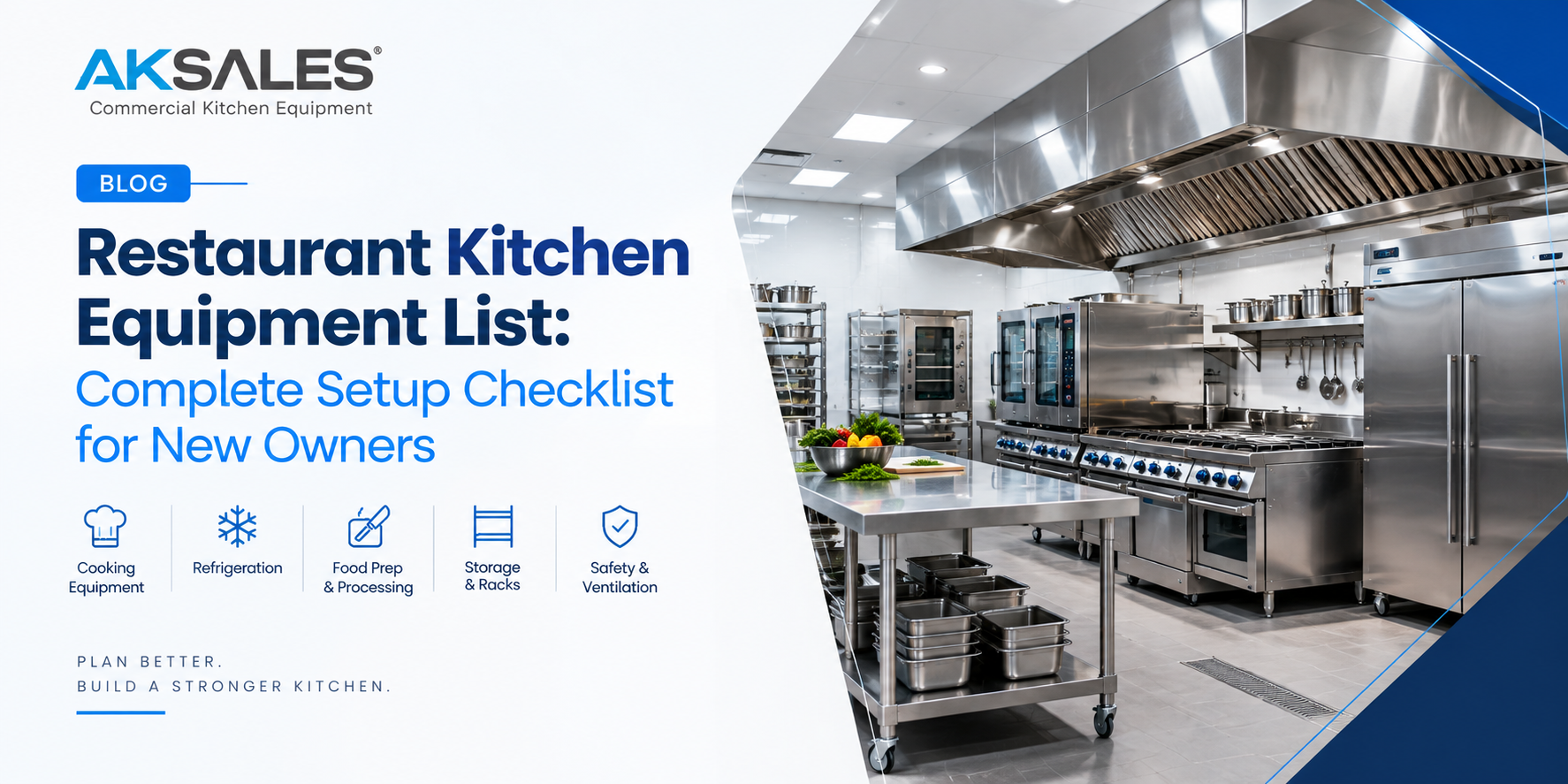
Restaurant Kitchen Equipment List: A Practical Setup Checklist for New Owners
In short
Planning a restaurant kitchen? Explore this complete restaurant kitchen equipment list covering cooking appliances, commercial refrigeration, food preparation tools, storage racks, serving counters, and ventilation systems. Learn how to choose the right equipment for your menu, budget, and kitchen space with practical setup tips from AK Sales, a commercial kitchen equipment manufacturer in Surat.
Setting up a restaurant kitchen involves more than purchasing cooking machines and installing countertops. You need to choose equipment that matches your menu, fits your available space, and supports your expected daily orders.
Buying equipment without proper planning can lead to unnecessary expenses, limited workspace, inefficient food preparation, and difficulties during busy service hours.
This restaurant kitchen equipment list will help you understand what your kitchen needs, how to select the right equipment, and what to consider before purchasing. Whether you are opening a restaurant, café, bakery, cloud kitchen, or hotel kitchen, this guide will help you plan your setup more effectively.
AK Sales manufactures commercial kitchen equipment in Bhatha, Surat, and provides equipment solutions for different food-service businesses.
Start With Your Menu Before Buying Kitchen Equipment
Before preparing your equipment list, take time to understand your restaurant's menu, expected order volume, and kitchen layout. These factors will help you identify which machines are essential and which can be added later.
Consider the following questions before making a purchase.
1. What type of food will you prepare?
Your menu determines your cooking equipment requirements. A restaurant serving Indian curries, tandoori dishes, and fried snacks will need a different setup from a café serving sandwiches, coffee, and bakery products.
2. How many orders do you expect during peak hours?
Plan your equipment according to your busiest service periods rather than your average daily orders. Higher order volumes may require additional burners, larger refrigerators, more preparation tables, or faster food-processing machines.
3. How much kitchen space is available?
Measure the kitchen area and identify the locations of water connections, drainage, gas lines, electrical points, and exhaust outlets. Every piece of equipment should fit comfortably without restricting staff movement.
4. What utilities does your kitchen require?
Check the available electrical load, gas supply, water connections, and ventilation arrangements. Confirm the equipment's power requirements before finalising your order.
5. Which equipment should you prioritise?
Refrigeration, ventilation, food preparation surfaces, and the main cooking line are essential considerations for most restaurant kitchens. Other equipment can be selected according to your menu and budget.
Restaurant Kitchen Equipment List by Kitchen Zone
A commercial kitchen works best when equipment is arranged according to the food preparation process. Food typically moves from receiving and storage to preparation, cooking, plating, and serving. Used utensils then move to the washing and sanitation area.
Organising equipment around this workflow helps reduce unnecessary movement and makes daily operations easier to manage.
1. Commercial Cooking Equipment
Cooking equipment is the centre of your kitchen. The right combination depends on your menu, cooking methods, and expected production volume.
Common commercial cooking equipment includes:
Commercial gas ranges and burner banks
Tandoors for breads, kebabs, and grilled dishes
Deep fryers for snacks and fried foods
Griddles, tawas, and hot plates
Convection ovens, pizza ovens, and bakery ovens
Bain-maries for holding prepared food at suitable temperatures
Commercial steamers and rice cookers
When selecting cooking equipment, consider burner capacity, temperature control, construction quality, cleaning requirements, and compatibility with your available gas or electrical supply.
Explore the commercial heating range collection to find equipment options for different kitchen requirements.
2. Commercial Refrigeration and Cold Storage
Proper refrigeration helps restaurants store ingredients safely, maintain food quality, and organise daily supplies.
Depending on your kitchen size and storage needs, you may require:
Upright commercial refrigerators
Commercial freezers
Undercounter refrigerators
Deep freezers for frozen products
Walk-in chillers or cold rooms for larger operations
Before purchasing refrigeration equipment, check its usable storage capacity, temperature range, door-seal quality, and suitability for the kitchen's operating conditions. Leave sufficient space around the unit for airflow and follow the manufacturer's maintenance recommendations.
You can explore the commercial refrigeration equipment collection to compare suitable storage solutions.
3. Food Preparation and Processing Equipment
Food preparation equipment helps staff complete repetitive tasks more efficiently and maintain consistency during busy periods.
Common options include:
Stainless steel preparation tables
Vegetable washing sinks
Commercial vegetable cutters
Food processors
Commercial mixer-grinders
Dough mixers and kneaders
Commercial blenders for sauces, beverages, and other preparations
Choose machines according to the ingredients you process and the quantity you prepare each day. A small restaurant may only need a food processor and mixer-grinder, while a high-volume kitchen may benefit from additional processing equipment.
Explore the commercial work tables and food processing equipment collections to identify suitable options.
4. Storage Racks, Shelving, and Trolleys
A well-organised storage area makes ingredients, utensils, and kitchen supplies easier to access. It also helps keep preparation surfaces clear.
Consider including:
Stainless steel storage racks and shelving
Rack trolleys for moving trays and prepared items
Food-grade storage containers and bins
Dedicated shelves for utensils and dry ingredients
Select storage equipment according to the available floor space and the weight of the items being stored. Keep ingredients protected, separate incompatible storage items, and ensure shelves can be cleaned easily.
For additional storage and handling options, explore the rack trolley collection.
5. Serving and Display Counters
Serving counters help connect kitchen operations with the customer-facing area. The right counter depends on whether your business offers table service, takeaway, self-service, or displayed food products.
Useful options include:
Pass counters for transferring plated dishes
Chaat and fast-food counters
Hot food display units
Refrigerated display counters
Service counters for takeaway orders
For snack shops and quick-service outlets, counter design should support fast preparation and convenient order collection. Display units should be selected according to the type of food being presented and its temperature requirements.
Browse the chaat and fast-food counter collection for suitable counter options.
6. Dishwashing and Sanitation Equipment
Cleaning equipment is essential for maintaining hygiene and keeping kitchen operations organised throughout the day.
Depending on the size of your restaurant, your setup may include:
Multi-compartment sinks for washing and rinsing utensils
Commercial dishwashers for higher washing volumes
Separate areas for dirty utensils and clean equipment
Grease traps and suitable drainage arrangements
Covered waste bins and cleaning supplies
Ensure that the washing area does not interfere with food preparation or the movement of ready-to-serve dishes. Larger kitchens should evaluate whether a commercial dishwasher can improve washing capacity and staff productivity.
7. Ventilation and Kitchen Safety Equipment
Ventilation should be planned alongside your cooking line rather than added after installation. Cooking produces heat, smoke, vapour, and grease, making suitable ventilation important for the working environment.
Depending on the kitchen design, consider:
Commercial exhaust hoods
Exhaust ducting and grease filters
Make-up air arrangements
Appropriate fire-safety equipment
Gas-leak detection and shut-off arrangements, where applicable
A first-aid kit and accessible emergency exits
The ventilation system should be designed for the cooking equipment, kitchen layout, and applicable safety requirements. Consult qualified professionals for gas connections, electrical installation, fire protection, and exhaust system design.
8. Smallwares and Essential Kitchen Tools
Large machines are only part of a functional restaurant kitchen. Staff also need the right tools for everyday cooking, preparation, portioning, and cleaning.
Your smallwares checklist may include:
Pots, pans, kadhais, and cooking utensils
Knives and chopping boards
Ladles, tongs, and spatulas
Measuring cups and weighing scales
Food thermometers
Food-grade containers and serving tools
Purchase quantities according to your menu, team size, and peak-hour requirements. Having sufficient tools available helps reduce interruptions during service.
Kitchen Equipment Requirements for Different Restaurant Types
Every food-service business has different equipment needs. Use the following lists as starting points and adjust them according to your menu, available space, and production volume.
Multi-Cuisine Restaurant
Essential equipment: Commercial cooking range, refrigeration, preparation tables, storage racks, ventilation, and dishwashing facilities.
Additional equipment: Tandoor, deep fryer, oven, steamer, or bain-marie, depending on the menu.
Café and Bakery
Essential equipment: Suitable oven, mixer, refrigeration, preparation tables, and storage equipment.
Additional equipment: Dough mixer, proofing equipment, rack trolleys, blender, and refrigerated display counter, depending on the products offered.
Fast-Food and Chaat Outlet
Essential equipment: Cooking counter, fryer or griddle, undercounter refrigeration, preparation space, and storage.
Additional equipment: Hot display counter, vegetable cutter, and specialised preparation machines, depending on the menu.
Cloud Kitchen
Essential equipment: Cooking line, refrigeration, preparation tables, storage racks, and washing facilities.
Additional equipment: Food packaging station, additional freezer capacity, and specialised cooking machines based on order volume.
Hotel, Canteen, and Large Commercial Kitchen
Essential equipment: High-capacity cooking equipment, bulk storage, food-processing machines, dishwashing facilities, and a professionally planned ventilation system.
Additional equipment: Bulk cooking vessels, food-holding equipment, larger refrigeration systems, and handling trolleys, depending on the number of meals served.
Explore equipment options for hotels and restaurants, cafés and bakeries, and canteens and cloud kitchens.
Restaurant Kitchen Setup Checklist: 10 Steps to Follow
Once you understand your equipment requirements, follow this checklist to organise the setup process.
Step 1: Finalise your menu and business concept. Identify the dishes you will prepare and the cooking methods required.
Step 2: Measure the kitchen space. Prepare a layout showing equipment positions, work areas, storage, and staff movement.
Step 3: Confirm utility requirements. Check the electrical load, gas supply, water connections, drainage, and exhaust arrangements.
Step 4: Finalise the equipment list. Record each item's dimensions, quantity, capacity, and intended position.
Step 5: Plan ventilation and safety. Coordinate the cooking line with suitable exhaust, fire protection, and safe utility installations.
Step 6: Compare suppliers and quotations. Evaluate equipment specifications, materials, workmanship, warranty terms, installation, and after-sales support rather than comparing prices alone.
Step 7: Check registrations and approvals. Obtain the applicable FSSAI registration or licence and verify other local, building, fire-safety, and trade requirements relevant to your business.
Step 8: Install and test the equipment. Have qualified professionals complete the required utility connections and verify that equipment operates correctly.
Step 9: Conduct a trial service. Test your complete menu under realistic operating conditions and identify delays or workflow problems before opening.
Step 10: Train your kitchen staff. Explain equipment operation, cleaning procedures, temperature monitoring, safety practices, and routine maintenance.
Completing these steps before opening can help you avoid last-minute changes and make better use of your equipment budget.
Restaurant Kitchen Setup in Surat: Important Considerations
Restaurant owners planning a kitchen in Surat should consider local operating conditions, the type of food they serve, and the availability of installation and maintenance support.
1. Account for Heat and Humidity
Hot weather and humid monsoon conditions can affect the working environment and refrigeration performance. Choose equipment suitable for the intended operating conditions and ensure proper ventilation and airflow.
2. Match the Setup to Your Menu
Restaurants serving Gujarati snacks, chaat, sweets, bakery products, and other specialised menus may need different cooking stations and counters. Avoid purchasing a large, general-purpose cooking line if your business requires a more focused setup.
3. Verify Local Requirements
Along with the applicable FSSAI registration or licence, confirm relevant requirements with the Surat Municipal Corporation, fire authorities, and other responsible departments for your premises and business type.
4. Consider Installation and After-Sales Support
Access to a supplier who understands your layout and can provide suitable equipment, installation assistance, and service support can make kitchen setup easier. Discuss delivery timelines, customisation, and service arrangements before confirming your purchase.
Restaurant Kitchen Equipment in Surat: How to Choose the Right Supplier
When looking for restaurant kitchen equipment in Surat, you may come across manufacturers, distributors, and traders. The right choice depends on your project, equipment specifications, budget, and service expectations.
A manufacturer may be able to customise tables, counters, racks, and other equipment to suit a specific layout. A distributor may offer access to equipment from multiple brands. Compare suppliers based on the requirements of your project rather than assuming one option is always better.
Before placing an order, ask these questions:
What stainless steel grade and material thickness are used?
Can the equipment be customised to fit my kitchen layout?
Are installation and commissioning services available?
What warranty and after-sales support are provided?
What are the expected delivery and installation timelines?
Can the supplier share examples of similar completed projects?
Reviewing these details helps you compare quotations more accurately and select equipment that suits your kitchen's daily operations.
You can explore AK Sales' completed projects to learn more about its commercial kitchen work.
Common Mistakes to Avoid When Setting Up a Restaurant Kitchen
Even a well-funded restaurant can face operational problems if its kitchen is not planned carefully. Avoid these common mistakes when purchasing equipment.
Buying household appliances for commercial use: Commercial kitchens often operate for extended hours and handle heavier workloads. Select equipment designed for the intended commercial application.
Ordering equipment before finalising the layout: Machines that do not fit the available space can lead to costly modifications and delays.
Ignoring ventilation requirements: Poorly planned ventilation can allow heat, smoke, and grease to accumulate in the cooking area.
Choosing insufficient refrigeration capacity: Limited cold storage can make ingredient organisation difficult and restrict purchasing flexibility.
Leaving too little working space: Staff need sufficient room to prepare food, move between stations, clean equipment, and handle orders safely.
Purchasing unnecessary machines: Buying every available machine at the beginning can increase costs without improving operations. Prioritise equipment according to your menu and expected volume.
Ignoring maintenance and service requirements: Consider cleaning access, replacement parts, warranty coverage, and service availability before making a purchase.
Plan Your Restaurant Kitchen With AK Sales
AK Sales manufactures commercial kitchen equipment in Bhatha, Surat, and provides equipment solutions for restaurants, hotels, cafés, bakeries, canteens, and cloud kitchens.
Its product range includes bakery equipment, commercial refrigeration, heating ranges, processing equipment, work tables, counters, and rack trolleys. Customisation options can help businesses plan equipment around their available space and workflow.
Whether you are opening a new restaurant or upgrading an existing kitchen, start with your menu, floor plan, and expected order volume. These details will help determine which equipment you need and how it should be arranged.
Visit AK Sales to explore the available equipment, learn about its services, or contact the team for a quotation.
Frequently asked questions
1. What equipment do I need to start a restaurant kitchen?
Most restaurant kitchens require cooking equipment suited to their menu, commercial refrigeration, preparation tables, storage racks, washing facilities, ventilation, appropriate safety equipment, and basic cooking tools. The exact requirements depend on the restaurant's size, menu, and expected order volume.
How do I decide how much kitchen equipment to buy?
Estimate the number of orders you expect during your busiest service period. Use this information to determine the required cooking capacity, refrigeration space, preparation area, and number of machines. Purchase essential equipment first and add specialised machines as your business grows.
Is FSSAI registration or a licence required for a restaurant in India?
Food businesses in India generally need the applicable FSSAI registration or licence. The appropriate category depends on the business type, scale, and applicable eligibility criteria. Check the current requirements before starting operations.
Is stainless steel suitable for commercial kitchen equipment?
Stainless steel is widely used in commercial kitchens because it is durable, easy to clean, and resistant to corrosion when the appropriate grade and finish are selected. Ask the supplier about the material grade, thickness, construction quality, and intended application.
Should I buy standard or custom-built kitchen equipment?
Standard equipment may be suitable when your kitchen has conventional dimensions and straightforward requirements. Custom-built tables, counters, and racks can be useful when you have limited space, an irregular layout, or specific workflow requirements.
Can AK Sales provide kitchen equipment according to my available space?
AK Sales offers commercial kitchen equipment and customisation options for different business requirements. Discuss your kitchen dimensions, menu, and intended workflow with the team to determine which solutions are suitable.
Does AK Sales supply restaurant kitchen equipment outside Surat?
AK Sales states that it supplies equipment across India. Contact the team to confirm delivery availability, packaging, transportation arrangements, and installation support for your location.
What should I check before purchasing commercial kitchen equipment?
Compare capacity, dimensions, material quality, utility requirements, warranty, maintenance needs, installation arrangements, and after-sales support. Ensure that each item fits your menu, available space, and expected production volume.