Buy or Lease Commercial Kitchen Equipment: What Works for a New Restaurant?
In short
Planning a new restaurant kitchen? Discover whether buying or leasing commercial kitchen equipment makes more sense. Compare costs, benefits, and equipment options to manage your budget, protect cash flow, and build an efficient commercial kitchen in Surat.
The equipment quotes have arrived. Ranges, chillers, hoods, prep tables, maybe a combi oven. The total is bigger than you planned, and the restaurant has not even opened yet.
That is the moment most owners start asking whether they should buy or lease commercial kitchen equipment. It is a fair question, because the answer shapes your cash flow, your menu options, and your running costs for years.
For most new restaurants, the best answer is a mix of both. Here is how to decide, item by item.
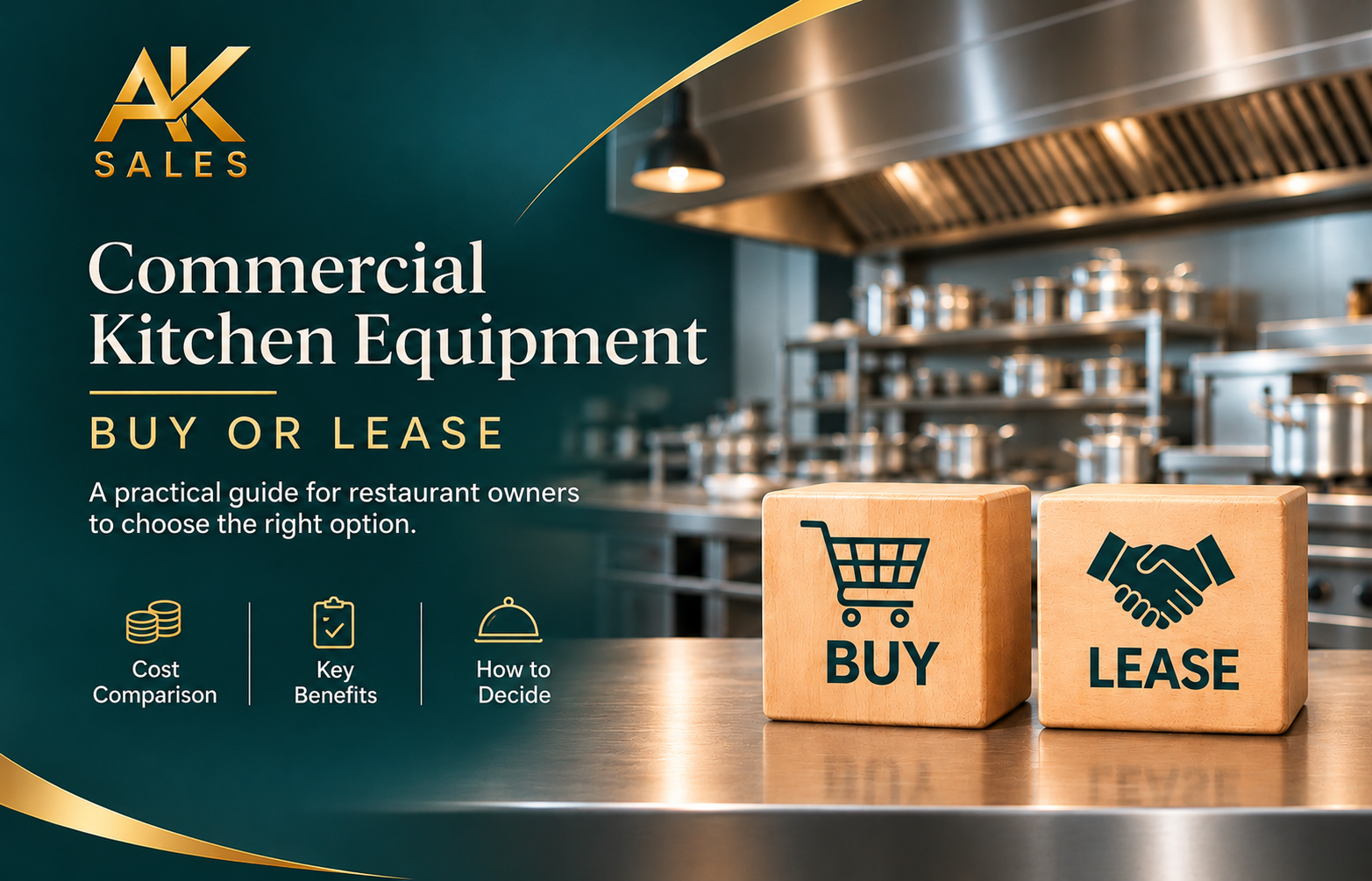
The Short Answer: Buy Essential Equipment and Lease Advanced Machines
Buy equipment that is long-lasting, custom-made, or hard to resell. Lease, rent, or finance equipment that is expensive, changes quickly, or is needed only for a short time.
In practice, that means buying stainless steel tables, counters, racks, ranges, and hoods. A premium combi oven, coffee machine, or ice cream machine is a better candidate for leasing, if a lease is available.
What Does New Restaurant Kitchen Equipment Cost?
Published Indian budget guides often quote a new restaurant kitchen equipment cost of roughly ₹3 lakh for a small cafe or cloud kitchen, rising to ₹25 lakh or more for a full-service restaurant. Treat these as rough markers, not quotes.
Your menu decides the real number. A tandoor and chaat counter need a very different setup from a bakery, and ventilation, refrigeration, and cooking ranges usually take the largest share.
Do not forget the extras: delivery, installation, gas and electrical connections, exhaust ducting, and transport of heavy items. Add them to both options before comparing. The most reliable figure is a written quotation based on your layout and menu.
When Buying Is the Smarter Move
Buying suits equipment that will work hard every day for many years.
You own the asset. There is no monthly commitment hanging over a slow month.
It fits your kitchen. Custom-fabricated stainless steel can match your space, counter heights, and workflow. Leased equipment usually comes in standard sizes.
Lower cost over the long run. A range that serves you for ten years usually costs less than ten years of lease payments.
Full freedom. Modify it, move it to a second outlet,t or sell it whenever you like.
The trade-off is a large upfront payment and full responsibility for repairs once the warranty ends. For a new restaurant with limited cash, that matters.
Custom fabricated items are also the hardest to lease, because they are built for one kitchen and have little use elsewhere. Work tables, sinks, hoods, and counters almost always belong in the buy column.
When Leasing or Renting Makes Sense
Leasing works best for items where flexibility is worth paying for.
Premium technology. Smart combi ovens and specialty machines improve quickly, so owning an older model can feel limiting.
Tight working capital. Spreading the cost keeps cash free for rent, salaries, and raw materials.
Short-term needs. Pop-ups, festival stalls, and seasonal menus rarely justify a full purchase.
Testing a concept. Renting lets you try a machine before committing to it.
The downsides are real. You usually pay more over the full term, you may be locked in for a minimum period, and leaving early can be costly. In the end, you might not own anything.
Buy or Lease Commercial Kitchen Equipment: Item by Item
Equipment | Better to buy | Worth leasing or renting |
Work tables, sinks, racks, trolleys | Yes, especially custom-built | Rarely offered |
Cooking ranges, burners, tandoors | Yes, these are daily workhorses | Only for short events |
Exhaust hoods and ducting | Yes, built to your layout | Not practical |
Refrigerators and freezers | Yes for core units | Extra units for peak season |
Combi ovens, blast chillers | If cash allows | Yes, if the brand offers a lease |
Coffee and ice cream machines | If volume is proven | Often a good fit |
Bakery ovens and mixers | Yes, for steady production | Trial or seasonal use |
Commercial Kitchen Equipment on Lease in Surat: What to Expect
Search for commercial kitchen equipment on lease in Surat,t and you will see the market works differently from the UK or Australia. Formal multi-year leasing is less common in India. You will mostly find used equipment dealers, short-term rentals for events, and a few premium brands that run their own lease programmes for items like combi ovens.
A practical approach is to buy your core stainless steel equipment from a local manufacturer, then use rental or finance for one or two high-value machines.
Before signing any lease or rental agreement, ask these questions:
What is the minimum lease period, and what happens if you close early?
Who pays for repairs, servicing, and spare parts?
Is the buyout price fixed at the start?
Are delivery, installation, and removal charges included?
What are your options when the term ends: buy, renew, upgrade, or return?
Common Mistakes to Avoid
Comparing only the monthly payment. Compare the total cost across the full term, including any buyout price.
Leasing everything. Payments continue in slow months, which can strain a young business.
Buying everything on day one. Start with what your opening menu needs and add equipment later.
Choosing used equipment without checks. Look at condition, warranty, and servicing support. Downtime can cost more than you saved.
Skipping the tax conversation. Ask your chartered accountant how depreciation, GST input credit, and lease payments apply to your case.
A Simple Way to Decide
List everything you need. Our restaurant kitchen equipment checklist is a good starting point.
Mark each item as long-life or fast-changing. Tables and ranges are long-life. Smart ovens and specialty machines change faster.
Decide how much cash must stay free. Rent, salaries, and raw materials come before equipment upgrades.
Buy the core, finance the rest. Choose lease, rent, or finance only for items that fit the lease reasons above.
Compare written quotes. Look at total cost over three to five years, not the first payment.
Sourcing Restaurant Kitchen Equipment in Surat
If you plan to buy, a local manufacturer makes the process easier. Dimensions, installation, and servicing are handled by one team instead of several vendors.
AK Sales manufactures commercial kitchen equipment in Surat for hotels, restaurants, cafes, bakeries, and cloud kitchens, with custom design, installation, and planning services and after-sales support. You can browse refrigeration and heating range equipment, or look at completed kitchen projects to see real setups.
For commercial kitchen equipment in Surat priced to your layout, AK Sales works with your menu and floor plan. The right answer is rarely all or nothing. Buy what builds your kitchen, and lease only what keeps it current.
Frequently asked questions
Is it better to buy or lease commercial kitchen equipment for a new restaurant?
For most new restaurants, a mix works best. Buy durable, custom items such as tables, counters, and ranges, and consider leasing or financing for expensive technology like combi ovens.
How much does new restaurant kitchen equipment cost in India?
Published guides often cite about ₹3 lakh for a small cafe or cloud kitchen and ₹25 lakh or more for a full-service restaurant. Your menu, size, and equipment quality decide the final figure, so ask for a written quotation.
Can I get commercial kitchen equipment on lease in Surat?
Options exist, but they are mostly used equipment dealers, short-term rentals, and brand-specific lease programmes. Formal multi-year leasing is less common than in some other countries, so ask suppliers directly.
Which kitchen equipment should I never lease?
Custom fabricated items such as work tables, sinks, hoods and counters are rarely suitable for leasing. They are built for one kitchen and last for years, so buying makes more sense.
What happens when a kitchen equipment lease ends?
Typical options are to buy the equipment, renew the lease, upgrade to a newer model, or return it. Check these terms and the buyout price before you sign.
Is used equipment a good option for a new restaurant?
It can reduce upfront cost, but check condition, warranty, and servicing support first. Poor reliability can cost more in downtime than you save on the purchase price.